



2026 Market Survey:
Microgrid and Distributed Energy Projects Grow in Complexity
Developers Pursue Value to Overcome Federal Incentive Losses
Projects Are Growing More Complex
Federal incentives have been rolled back, tariffs have reshaped supply chains, and electricity demand is rising faster than the grid can respond. For many in the industry, these shifts have created real friction. But according to new market research, they have also accelerated a broader transformation already underway.
The 2026 Microgrid and Distributed Energy Market Research, conducted by Energy Changemakers and Renewable Energy World on behalf of Xendee, captures how developers, engineers, and energy professionals are adapting to a market that now rewards optimization, flexibility, and complexity over simplicity.
Based on responses from more than 150 industry professionals, the research shows an industry moving beyond subsidy-driven development and toward projects that must deliver clear, bankable value on their own.
A National Market, Not a Regional One
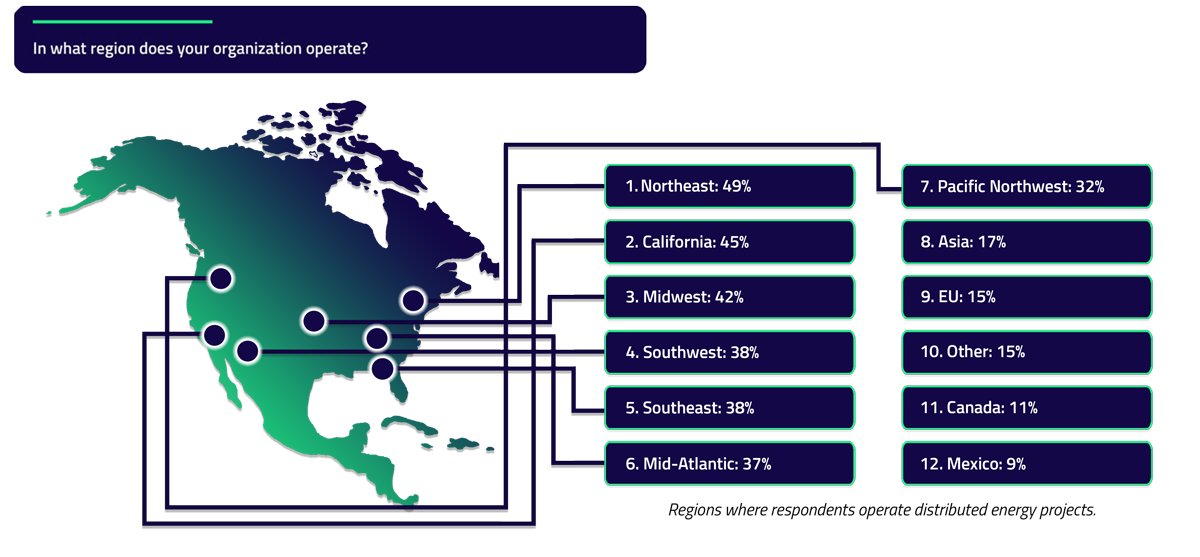
Distributed energy and microgrid development is no longer concentrated on the coasts. Survey respondents reported active projects across nearly every U.S. region, reflecting how rising energy prices, reliability concerns, and load growth have become national challenges.
As electricity demand increases, driven by data centers, electrification, and onshoring, organizations across the country are exploring new approaches to securing power, controlling costs, and managing risk. The market fundamentals remain strong. What’s changing is how projects are being designed.
Developers Are Still Building But Not All Projects Are Equal
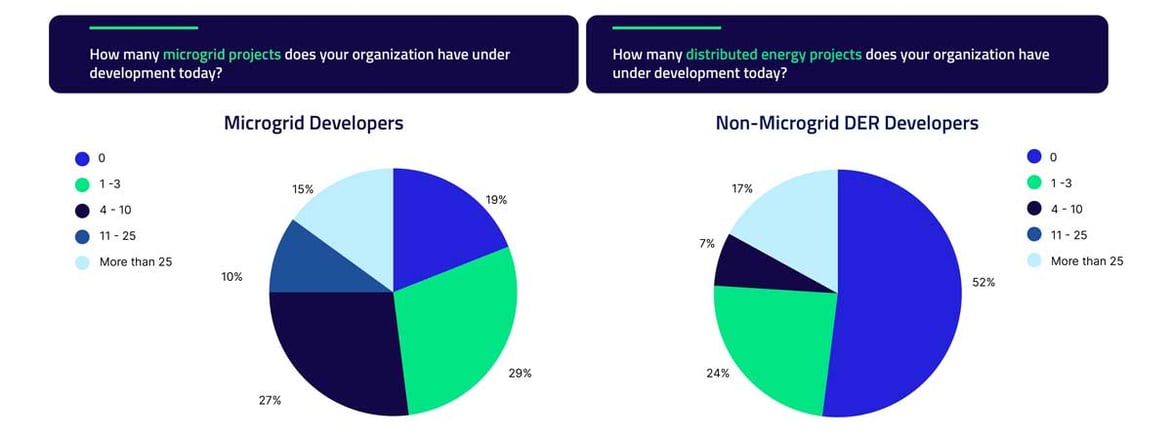
While federal funding losses have affected nearly two-thirds of respondents, project activity has not stalled across the board. Instead, the research reveals a growing divide.
Developers focused on multi-DER microgrids are far more likely to have projects under development than those pursuing simpler, one- or two-technology systems. The ability to coordinate multiple assets, capture additional revenue streams, and optimize across operating scenarios is increasingly what makes projects viable.
In this context, complexity is not a burden, but a differentiator.
Technology Portfolios Are Expanding to Stack Value
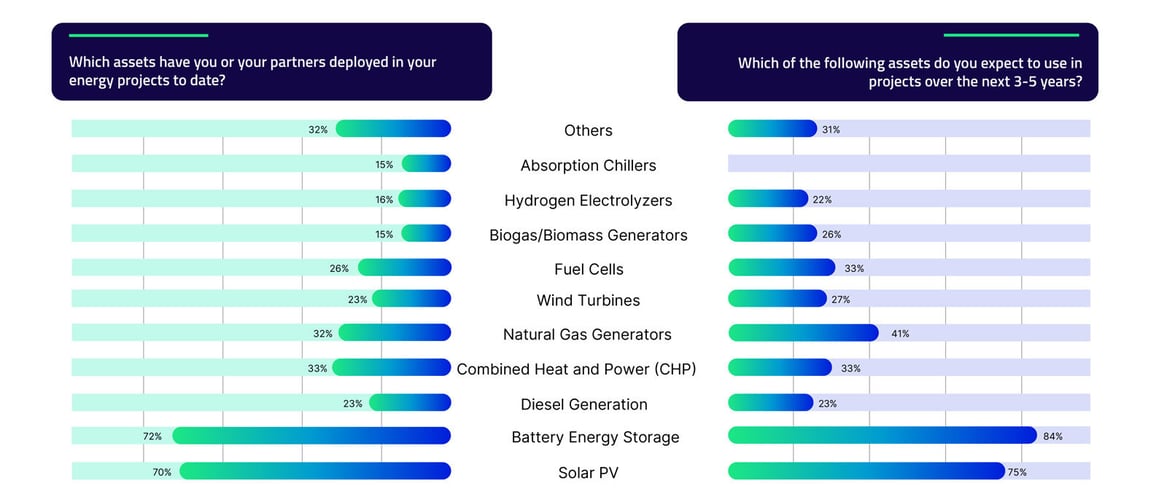
Solar and battery storage remain foundational, but they are no longer sufficient on their own. Survey respondents expect increased deployment across nearly every DER category over the next three to five years, including CHP, natural gas generators, fuel cells, wind, biogas, and hydrogen electrolyzers.
This expansion reflects a clear strategy: stacking technologies to capture more value, improve resilience, and meet increasingly strict financial thresholds. As projects grow larger and more complex, understanding how these assets interact becomes critical. That complexity, however, raises new challenges.
The Biggest Barriers Are No Longer Technical
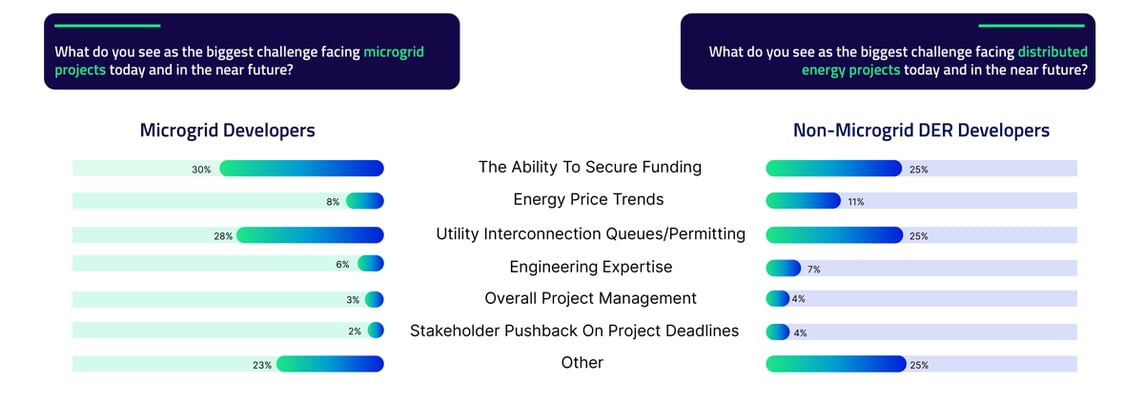
Funding, interconnection delays, and permitting challenges consistently ranked among the top concerns for both microgrid developers and simpler DER developers. At the same time, reduced incentives mean there is far less margin for error.
Projects must now move faster, reduce uncertainty earlier, and clearly demonstrate value before capital is committed. For engineers and developers, this places greater emphasis on rigorous planning, scenario analysis, and risk reduction well before construction begins.
Why Planning Tools and Software Matter More Than Ever
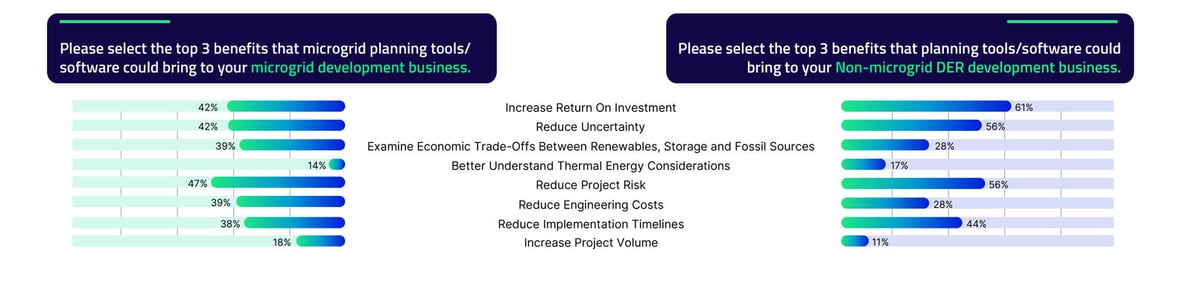
As complexity increases, so does reliance on sophisticated planning and control tools. Across the survey, respondents identified reduced project risk, improved ROI, and forward-looking predictive capabilities as the most valuable benefits of modern microgrid planning software.
These tools are no longer just about design efficiency. They are becoming essential to securing funding, aligning stakeholders, and ensuring projects remain financially viable across a wide range of operating conditions.
The research suggests a clear takeaway: the organizations best equipped to manage complexity are the ones continuing to build.
Download the Full Market Research Report
The full whitepaper, which can be downloaded below, dives deeper into:
-
How developers are adapting to federal policy changes
-
Why microgrid developers remain more active than simpler DER developers
-
Which technologies are driving future project complexity
-
What engineers and decision-makers expect from planning and control tools
Download the 2026 Market Survey

© 2026 Xendee